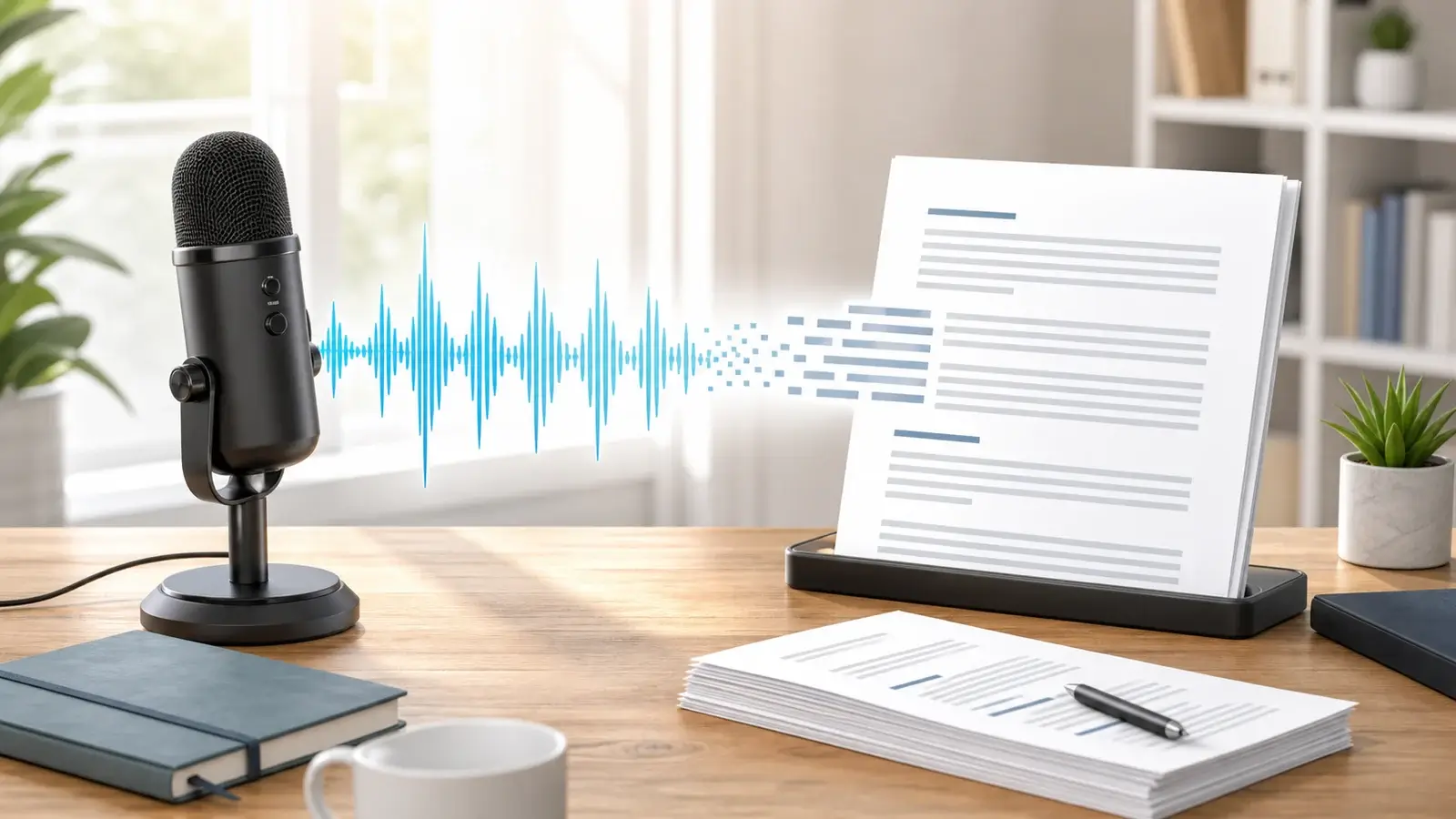
What is audio transcription?
Learn what audio transcription means, how it works, and what makes a transcript accurate, readable, and useful.
The short answer
Audio transcription is the process of turning spoken audio into written text. The audio may come from a meeting, lecture, interview, podcast, voice memo, webinar, phone call, video recording, or any other source where people are speaking.
A transcript can be created by a human transcriber, by speech-to-text software, or by a workflow that combines automatic transcription with human editing. The goal is not only to capture words, but to make spoken content searchable, readable, quotable, and easier to reuse.
How audio transcription works
Every audio transcription workflow starts with listening to a recording or live speech. In a manual workflow, a person plays the audio, types what they hear, checks unclear sections, and formats the result. In an automatic workflow, speech recognition software analyzes the audio signal and predicts the words that were spoken.
Modern automatic transcription systems usually rely on speech recognition models trained on large amounts of audio and text. They detect patterns in speech, language, pauses, and pronunciation, then produce text that can be reviewed or exported.
The result may be a plain transcript, a speaker-labeled transcript, a timestamped transcript, or a subtitle file. The best format depends on what the transcript is for.
Human transcription, AI transcription, and edited transcripts
Human transcription is useful when accuracy, nuance, formatting, and judgment matter. A trained transcriber can replay difficult sections, identify speakers, mark unclear words, and decide how much filler speech to keep. Human review is especially valuable for legal, medical, academic, journalistic, or sensitive material.
AI transcription is useful when speed and scale matter. It can process long recordings quickly and produce a draft that is good enough for search, notes, summaries, and many internal workflows. Its quality depends on the audio, the speakers, the language, and the vocabulary.
Edited transcription combines both approaches. Software creates the first draft, then a person reviews names, numbers, technical terms, speaker changes, and important quotes. For many everyday uses, this is the most practical balance.
What affects transcription accuracy
Audio quality matters more than most people expect. A clear recording with one speaker near the microphone is much easier to transcribe than a noisy room with several people talking over each other.
Accents, speed, background noise, music, echo, microphone distance, specialized terminology, and overlapping speech can all reduce accuracy. Names, product terms, acronyms, and numbers are common sources of errors because they may not be predictable from context.
The purpose of the transcript also affects how much review is needed. Internal notes may tolerate small mistakes. Published quotes, captions, research records, or compliance documents need more careful checking.
Common audio transcription outputs
A plain transcript removes most timing information and reads like an article or meeting note. It is useful when the reader mainly wants the words.
A verbatim transcript preserves speech more closely. It may include false starts, filler words, repeated words, and non-speech sounds when they matter.
A cleaned transcript edits the spoken language lightly for readability. It may remove filler words, fix obvious restarts, and make sentences easier to scan while keeping the meaning intact.
A time-coded transcript includes timestamps so a reader can jump back to the matching moment in the audio. This is useful for interviews, research, editing, legal review, and media production.
A subtitle or caption file breaks text into short timed cues. It is designed to appear on screen while audio or video plays, so it must be shorter and more precisely timed than a normal transcript.
What to watch for
Do not treat every transcript as final just because it looks polished. A transcript is only as reliable as the audio and the review process behind it.
Before using a transcript for important work, check speaker names, proper nouns, dates, figures, and any line that sounds surprising. If the transcript will be published, compare key passages with the original audio.
Good audio transcription makes spoken information easier to find and reuse. Great transcription also preserves context, meaning, and trust.
More Posts

What is research in film production?
Learn how research supports film production, from story and character work to locations, visuals, interviews, and accuracy.

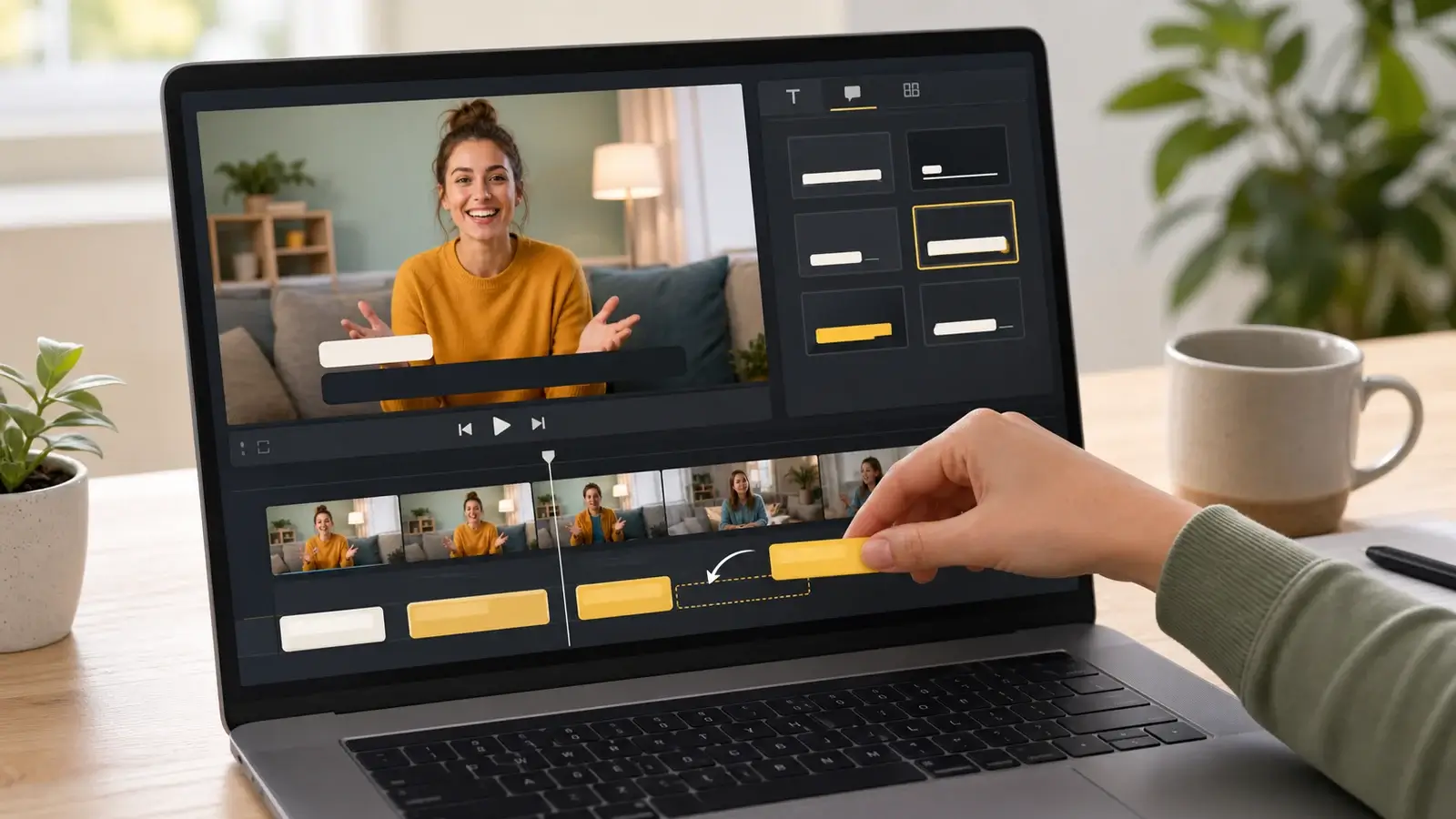
How to add captions in iMovie
Learn how to add caption-like text in iMovie, what the app can and cannot do, and how to keep captions readable.
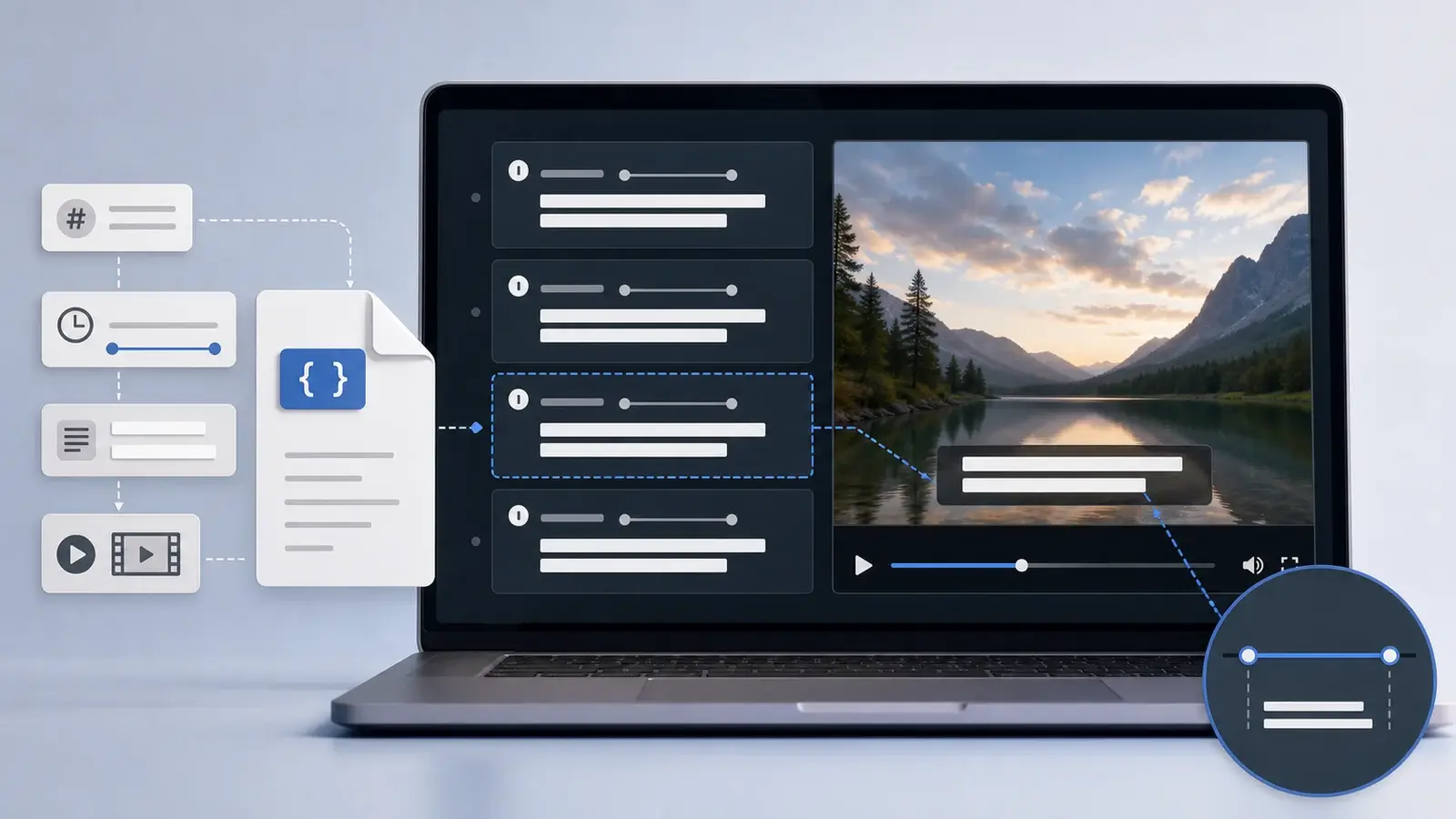
What is an SRT file?
Learn what an SRT file is, what its timestamps mean, and how this plain text subtitle format is commonly used.